Runegrim: Channeling Ancient Viking Runes in Modern Design
There’s a certain weight to historical typography that modern, minimalist fonts often strip away. When you’re working on a project that demands authority, mystique, or a rugged edge, standard sans serif fonts can feel a bit too polite. This is where Runegrim enters the conversation. It isn’t just a typeface; it’s a bridge between the ancient world and contemporary design needs. Built on the foundation of Ancient Viking Rune Script, Runegrim captures the spirit of Norse history while remaining legible enough for today’s fast-paced visual environment.
For many creatives, diving into historical scripts is daunting. The Unicode format of ancient fonts can be confusing, often requiring specialized software or technical knowledge that disrupts the creative flow. Runegrim solves this problem by operating as a standard, installable font. You don’t need to be a historian or a code expert to use it. Whether you are a seasoned graphic designer or a hobbyist crafting a personalized gift, you simply type out your message, and the runic aesthetic appears instantly. It brings the power of the past to your keyboard without the technical headache.
The Visual Identity: More Than Just Jagged Edges
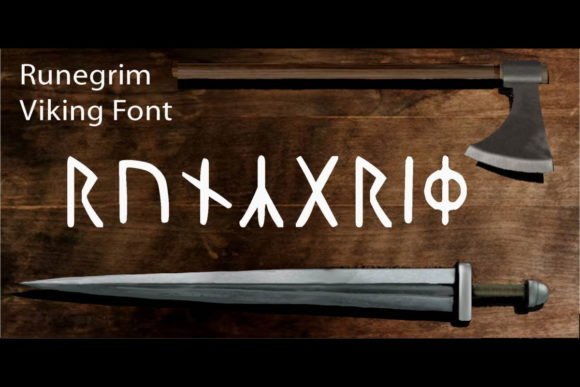
At first glance, you might categorize Runegrim as a strictly "themed" font, suitable only for Halloween props or heavy metal album covers. However, a closer look reveals a sophisticated design system. While it draws heavily from the angular strokes of futhark (the runic alphabets), the letterforms in Runegrim have been refined for balance and rhythm. The strokes are bold and confident, creating a heavy visual texture that anchors a design.
The personality of Runegrim is undeniably masculine and ancient, yet it carries a certain elegance in its symmetry. It functions effectively as a display font because its high-contrast lettering commands attention. Unlike a script font that mimics cursive handwriting, or a handwritten font that feels casual, Runegrim feels monumental. It suggests permanence—like a carving in stone or a brand burned into wood. This makes it an invaluable asset for projects where you want to evoke a sense of tradition, strength, or timelessness.
Practical Applications: From Apparel to Brand Identity
The versatility of Runegrim is perhaps its strongest selling point. In the realm of clothing and apparel, it is a natural fit. The sharp lines of the font translate exceptionally well to screen printing, embroidery, and DTG (Direct-to-Garment) printing. It creates bold logos for streetwear brands, gym apparel, or outdoor gear companies that want to project an image of resilience. Because the strokes are distinct, the font remains legible even when scaled down on hat brims or printed on textured fabrics.
Beyond fashion, packaging design is another area where this premium font shines. Imagine a craft brewery, a small-batch coffee roaster, or a men’s grooming line. Using Runegrim for the product name or the logo immediately communicates a handcrafted, artisanal quality. It tells the customer that the product has depth and history, even if the brand was established yesterday.
For digital creators, Runegrim offers a distinct edge in social media graphics. In a sea of rounded, friendly sans serif font choices, a runic-styled header stops the scroll. It is particularly effective for content creators in the gaming, history, or fantasy niches. It can also be used for web design headers to establish a unique brand identity that stands apart from the generic templates used by competitors.
Mastering the Pairing and Hierarchy
Using a creative font like Runegrim requires a bit of strategy to ensure your design remains professional and readable. Because Runegrim is a display font, it is rarely suited for body text. Its intricate letterforms can become tiring to read in long paragraphs. Instead, reserve it for headlines, sub-headers, and logos.
To create effective visual hierarchy, pair Runegrim with a clean, neutral typeface. A geometric sans serif font works beautifully here. The simplicity of the sans serif provides a visual "breath" that balances the density of the runic letters. Alternatively, pairing it with a classic serif font can enhance the historical feel, creating a layout that looks like a vintage academic paper or a historical document. Avoid pairing it with overly decorative script fonts, as the competing styles will clash and confuse the viewer.
Accessibility and Usability for Non-Designers
One of the most helpful aspects of Runegrim is its utility for people who aren't familiar with complex design software. If you are a crafter using a Cricut machine, or a small business owner creating flyers in a word processor, Runegrim behaves just like any other font on your computer. This accessibility democratizes modern typography. You don't need to invest in expensive design assets or learn vector manipulation to achieve a high-end look.
However, readability should always be your guide. When using Runegrim for handicrafts or signage, consider the viewing distance. If the text is small, the intricate details of the rune shapes might merge. In these cases, increasing the letter spacing (tracking) can significantly improve legibility. Test your designs by printing a sample or viewing it on a mobile screen before finalizing. The goal is to capture the aesthetic without sacrificing the message.
Evaluating the Fit for Your Project
Before committing to Runegrim, ask yourself about the emotional core of your project. Does your brand or design aim to be playful, soft, or futuristic? If so, Runegrim might be too aggressive. But if you are aiming for a brand identity that values strength, history, craftsmanship, or fantasy, it is an excellent choice.
Always check the commercial font licensing if you plan to use it for merchandise or client work. A legitimate license ensures you are protected legally and supports the type designers who created the font. When you invest in a premium font, you are often investing in a wider set of glyphs and better kerning pairs, which results in a more polished final product.
Ultimately, Runegrim is more than just a collection of Viking-looking letters. It is a typeface that carries a specific atmosphere. Used correctly, it can transform a flat design into something with texture, story, and impact. Whether you are designing a tattoo studio logo, a fantasy book cover, or a rugged clothing line, Runegrim provides the tools to make your vision a reality. It respects the source material of the ancient Viking rune script while serving the practical needs of the modern creative economy.